Showing posts with label TRAVEL. Show all posts

Monday, September 19, 2011

Business travel while sick: facts you need to know!!

Business travel while sick: facts you need to know!!
  • The highest rates of flu have been among those aged one to four
  • The second-highest rates are among those aged between 15 and 44
  • Most fatalities have been aged between five and 65
  • More than a third of deaths have not been in high-risk groups
Nearly all of those who died had not been immunized. Here is a guide of the different types of flu, how to avoid it, and how to deal with the symptoms if you do catch it.

Severe cases of flu are crippling, chances are that you or a member of your family have suffered from it
  • What is the difference between a cold, flu and swine flu? 
A cold is a mild illness caused by a respiratory virus that generally causes sneezing, a cough, a sore throat and a runny nose. It lasts for a short time and causes no complications. 
Flu is a more serious illness caused by a different group of viruses (the influenza viruses). The symptoms are muscle pain, marked tiredness, sweating, shivering, fever and congestion. Chest complications are common in those with chest or heart disease. Flu can be caused by a number of different influenza viruses and swine flu is one of these. Swine flu causes diarrhea and very high temperatures, more so than other flu. 

If I've had the flu shot, am I covered for swine flu? 

Yes. The seasonal flu vaccine this year contains three strains of influenza virus including swine flu. 

If I've already had flu, is it still worth me having the shot? 

If in a high risk group then it is definitely worth it. It may be you have had flu caused by a different strain of influenza virus and the vaccination can offer you protection from other strains, including swine flu.

Can I be a carrier of the virus without having symptoms? 

We have seen people test positive for swine flu who have shown very mild symptoms or no symptoms at all. This means you can infect others without showing any symptoms yourself. This is not really being a carrier  -  we call this a sub-clinical infection. 

Does the flu virus react differently in each of us?

Yes. All infections cause a spectrum of symptoms ranging from mild to severe and it is hard to predict how we will react. As well as background health, factors including how many virus particles the body takes on  -  known as viral load  -  are important. 

What medicine should I take if I have flu?

Healthy adults should take acetaminophen (usually two tablets) every six hours. In addition, you can take 400mg ibuprofen every eight hours. It is safe to take the two together. 

When should we call a doctor? 

Anyone in one of the high risk groups who has not been vaccinated should call the doctor immediately if you suspect swine flu.

What are the red flag signs for calling a doctor if not high risk? 

Red flag signs are breathlessness, a fever that is not going down, or reduced urination. It is important to remember lethargy is normal with flu  -  but drowsiness is not. 

When am I contagious? 

You are most infectious/contagious soon after developing symptoms. You can continue to spread the virus, by sneezing, for up to five days. You become less infectious as symptoms subside, and once symptoms are gone, no longer considered infectious. 

Can flu be carried on/in food? 

There is no research to suggest swine flu can be carried on or in food, including pork products. Contaminated objects can transfer the virus so basic hygiene is important when handling everything, including food. 

How long can flu germs exist on a surface? 

Up to 48 hours, depending on the temperature and humidity. Flu viruses survive longer on surfaces than cold viruses. 

Should I be putting my dishwasher on at a higher temperature? 

No. Washing with any detergent and water is enough to remove virus particles. 

And the washing machine? 

Flu viruses cannot survive on clothes for long and washing at normal temperatures is sufficient to remove them. 

Can I transmit it to others via my skin or clothes? 

It does seem to be more contagious than other flu illnesses with more people getting ill from any one contact. Coughing and sneezing creates an aerosol of virus that spreads up to a metre and infection is also possible from contaminated hard surfaces such as door handles rather than clothes. Keep hands clean and there should be no virus to transmit. 


More Travel Tips!
  • Remember, wash your hands after you sneeze or cough!!
  • Always wash your hands after touching the ATM, or when using your credit card
  • Never put your hotel key in your mouth! 


Sunday, May 29, 2011

In 2000 Dallas Morning News Asked: Germ Warfare New warnings-and new products-feed our fears about chemicals, microbes and dirt. Are we worrying too much?

Germ Warfare New warnings-and new products-feed our fears about chemicals, microbes and dirt. Are we worrying too much?


No, says Lisa Holmes of Grapevine, TX. After getting sick too many times while traveling on business, she has perfected her own germ-avoidance system.


"I bring the term "clean freak' to a new level," Ms. Holmes says. "I have invented a new term I call "biophobe.'


"When I am introduced to someone and they take my hand, I am very careful not to touch any exposed skin on my body until I can wash my hands with soap and water. After I wash my hands, I grab the paper towel and dry. I then apply anti-bacterial cleaner on my hands. I get out of the bathroom by opening the door with my sleeve... 


"Hotels are obstacles. The telephones are never cleaned by the maids, and this is quite evident by the smell of cologne on the receiver. I clean the receiver with Clorox (disinfecting wipes). Since I have them out, I run it along the lamps, remote control, the heater, door handles and bathroom fixtures. I never pick up a pen that is left in the room, as it may have been in someone's mouth."


In 2010 Ms. Holmes was granted a patent by the United States Patent Office for all manner of antimicrobial plastic cards and holders.  Including hotel keys, membership cards, drivers licenses.  More info please See: http://antimicrobialcards.blogspot.com/2011/02/download-information-about.html


The Dallas Morning News | June 14, 2000 | Author: Leslie Garcia; Staff writer

Business people are concerned with health risk associated with business travel
Full article: http://nl.newsbank.com/nl-search/we/Archives?p_action=doc&p_docid=0ED822CF60A52A9B&p_docnum=1&s_dlid=DL0111052914370909648&s_ecproduct=DOC&s_ecprodtype=&s_trackval=GooglePM&s_siteloc=&s_referrer=&s_username=theconceptco&s_accountid=AC0111052914000923070&s_upgradeable=no

********************************************************

The Dallas Morning News

Germ Warfare New warnings-and new products-feed our fears about chemicals, microbes and dirt. Are we worrying too much? 
Leslie Garcia Staff writer of The Dallas Morning News  
Published: June 14, 2000


Special to The Dallas Morning News:

or those who think a clean apple is one we've rubbed against our blue-jean shorts, Barbara Gollman offers this (unappetizing) food for thought: wax.

"To me, that's the most disturbing thing," says the Dallas spokesperson for the American Diet etic Association. "I think, what's trapped under that wax?"

Makes you want to whip out the sandpaper and start sanding the daylights out of that skin. Or at least use soap and water. Or just water. Or perhaps, in our seemingly endless crusade for a germ-free world, the latest weapons: Procter & Gamble's Fit Fruit & Vegetable Wash ("Fit" for short) and another contaminant remover called Next Generation Fresh Fruit and Vegetable Wash.

They join a list of products designed to rid our worlds of the much maligned five-letter word: GERMS.

In the past four years, more than 700 new products have been released that contain antibacterial ingredients. Rare is the hand soap or dishwashing liquid that doesn't stress its antibacterial-ness. Mr. Clean sells antibacterial wipes. Pine-Sol adds the tag to its product label, too. Tide With Bleach boasts of killing "99.9 percent of bacteria."

A catalog sells sanitary coverings for questionably clean hotel linens. Microban Products Company advertises that its "built-in protection" fights bacteria, mildew and mold on carpet, bedding, socks, humidifiers, undies. It recently
 announced a new antibacterial process for towels.

On the one hand, who can blame us for worrying? Seems every time we sneeze, wipe chicken juice off the counter or belly up to a salad bar there's more health-threatening news. About germ-laden sponges, or E. coli. About flesh-eating bacteria, or playground equipment awash in bodily fluids. About women's bathrooms beating out men's in a which-has-more-germs study.

But on the other hand . . . are we getting a little carried away?

* Yes, says Dr. Maura Meade-Callahan, assistant professor of biology at Allegheny College in Pennsylvania. "Obviously, in order to keep the household safe in general, you need to disinfect. But there is a possibility of going overboard."

* No, says Ms. Gollman (especially where food is concerned). "I do feel like we're becoming much more cautious, but I think it's important that we are. I used to be the world's worst: "I can handle a little bacteria.' But the more we see how prevalent foodborne illnesses are, the more that's making us cautious and encouraging others to be more cautious."

* Yes, says Dr. Daniel Skiest, assistant professor of internal medicine in the infectious disease division at University of Texas Southwestern Medical School. "The pathogens people are scared about are not acquired by common contact outside the hospital. It looks like some of the companies are making a lot of money based on irrational fears."

* No, e-mails Lisa Holmes of Grapevine. After getting sick too many times while traveling on business, she has perfected her own germ-avoidance system.

"I bring the term "clean freak' to a new level," Ms. Holmes writes. "I have invented a new term I call "biophobe.'

"When I am introduced to someone and they take my hand, I am very careful not to touch any exposed skin on my body until I can wash my hands with soap and water. After I wash my hands, I grab the paper towel and dry. I then apply anti-bacterial cleaner on my hands. I get out of the bathroom by opening the door with my sleeve . . .

"Hotels are obstacles. The telephones are never cleaned by the maids, and this is quite evident by the smell of cologne on the receiver. I clean the receiver with Clorox (disinfecting wipes). Since I have them out, I run it along the lamps, remote control, the heater, door handles and bathroom fixtures. I never pick up a pen that is left in the room, as it may have been in someone's mouth."


* Yes, says systems analyst Joe Schneider of Carrollton. "I just think it's become a little excessive. People probably look at me like I'm strange, but we'd go to the bowling alley and my son would fish out gum from under the pinball machine. "OK, take it out of your mouth and give it to me.' I don't want him doing that, but he managed to survive. He's 4 and has only had two ear infections."

* No, e-mails a reader from Perryton, Texas. "I use a washcloth to clean the countertops. I use it only once. Then I wash the cloth in the washing machine with bleach. I dry the countertops with paper towels, making sure I do not spread anything by using it too much. You could pick up something and spread it by multiple swaths with one towel."

So what's a consumer to do? Perhaps the first step is to calm down. Realize germs are part of life. Use common sense. And listen to those who study this sort of thing.

"People think germs are icky, but they're also beneficial and we couldn't live without them," Dr. Meade-Callahan says. "Our own immune systems don't know how to cope with what they've never seen before. If you try to eliminate everything, somewhere down the road you'll be exposed to it and your immune system won't know how to react and the illness will be a lot more serious."

One theory under investigation is that the squeaky-clean environment in which many kids grow up has contributed to the increase in childhood autoimmune diseases.

Says Dr. Rial Rolfe, associate professor of microbiology and immunology at Texas Tech Medical Center: "Getting infections and developing immunity are part of childhood. Totally protecting children could actually backfire as they get older."

The potential problem, he says, is this: "If a micro-organism is exposed to antibacterial substances, it could develop resistance not only to that, but to other substances as well."

In other words, say someone had a middle ear infection. The doctor prescribes penicillin. But, Dr. Rolfe says, "It may not it be as therapeutically effective, because maybe the bacteria [that caused the infection] was exposed to an antibacterial and developed a resistance to not only the antibacterial but to penicillin as well."

One antibacterial product incorporated into plastics and fabrics is called triclosan. In studies, Dr. Meade-Callahan has found that it is no longer active after certain common bacteria grow on it.

Mr. Schneider of Carrollton has found fungus on his children's high chair and his dog's water bowl - both of which purport to contain antibacterial properties. And although fungus is not bacteria, the growth still strikes him as a bit odd.

"Anything can come along and colonize that surface," Dr. Meade-Callahan says. "I tell my students, "You've got to let your kids eat dirt sometimes.' You have to be exposed to microbes for the immune system to recognize them as something that's not supposed to be there."

Antibacterial products, Dr. Skiest says, generally don't protect against such bacteria as E. coli. It's contracted by eating or drinking something - an undercooked hamburger, perhaps - that was contaminated.

"The cow was probably infected," he says. "Since the meat wasn't heated to the appropriate temperature, it didn't kill or inactivate the bacteria."

Using antibacterial products can create a false sense of security, says registered nurse Deborah Phillips.

"When you put an antimicrobial product into everyday things like a countertop, it's really unnecessary," says Ms. Phillips, infection control coordinator for Parkland Health and Hospital Systems. "Into tissue, too. That person who blows his nose still needs to wash his hands."

Which brings us around to quite possibly the most effective way to keep us healthy: hand washing. That alone can decrease the rate of foodborne illness by 50 percent, Ms. Gollman says.

"Most of diseases spread in households are because someone didn't wash their hands from going to the restroom to preparing food, or when they have a cold or other infection," Ms. Phillips says. "They have the germ on their hand and make contact with someone else in the family."

Well, surely, you might think, the soap to use should be antibacterial. Judging from the experts, not necessarily.

"You can use regular soap that creates a lather," Ms. Phillips says. "The most important part of hand washing is that it's done for 10 to 15 seconds and that there's friction because you're removing the bacteria from your hands. The friction causes handwashing to be effective."

Ms. Gollman uses only one antibacterial product: Purell, a waterless hand cleaner. When it comes to cleaning countertops, knives and cutting boards, she opts for a "very diluted" bleach solution in a spray bottle.

Dr. Skiest: "There are no antibacterial products in my house. Just common sense."

Dr. Meade-Callahan: "Just plain washing hands with warm water and soap, mechanically removing the dirt, can take care of 97 percent of the bacteria. When you add antibacterial products, it may take care of 99. But that 2 percent, at least to me, doesn't seem worth the risk of having resistance to other drugs build up in the population."

Dr. Rolfe doesn't use antibacterial soap either. For fruits and vegetables, he just uses water. So does Dr. Skiest. Ms. Gollman is hooked on Fit.

"It's instantaneous," she says. "I am very impressed with the amount of dirt and wax that it takes off fruits and vegetables . . . Your water will be so filthy if you've soaked them."

The American Dietetic Association recommends four steps to keeping food safe: Hand washing. Cooking foods at the proper temperature. Storing foods at the proper temperature. Keeping raw foods separate from those ready to eat.

The organization even recommends cleaning non-edible peels on produce. Ms. Gollman never used to clean cantaloupes. Then she read a story about a case where people became ill by eating them from a salad bar.

"When you cut through the rind, the juices leak out and wash the skin with juice," she says. "Then the knife goes back on the fruit, over and over again so it can infect with the germs on the rind."

Sometimes people tell her, "I'm a vegetarian. I don't have to worry about E. coli and hamburger." She tells them that deadly germs can also be found on fruits and vegetables. For example, one of the biggest national outbreaks of salmonella was caused by bad alfalfa sprouts.

"We probably should have been worried about this a long time ago," Ms. Gollman says. "Ten years ago, I was told, "Nobody wants to hear about it.' I wanted to do my thesis on food safety, but my professor said it was a yucky subject."


ILLUSTRATION(S): (Special to The Dallas Morning News: Tom Klare) Illustration of a germ and an attempt to detroy. CHART(S) : COMING CLEAN.

Copyright 2000, 2001 The Dallas Morning News


Tuesday, February 8, 2011

Hotel guests leave plenty of germs behind

Hotel guests leave plenty of germs behind

Study finds cold viruses all over rooms after sick guests checkout


Many hotel keys are often reused

Hotel guests leave behind more than just socks and old paperbacks: A new study found viruses on TV remotes, light switches and even hotel pens after cold sufferers checked out.
The germ testing was done before the rooms were cleaned, so it likely overstates the risks that most travelers would face. Nevertheless, it shows the potential hazards if a hotel’s turnaround amounts to little more than changing the sheets and wiping out the tub.
“You sure hope the cleaning people were good,” said Dr. Owen Hendley, the University of Virginia pediatrician who presented results of the study Friday at a meeting of the American Society for Microbiology.
Besides hotel hazards, the findings point out things that people may not think to clean in their homes when someone has a cold.
“We know that viruses can survive on surfaces for a long time — more than four days,” said Dr. Birgit Winther, an ear, nose and throat specialist at the university who led the study.
Its aim was to test the survival of rhinoviruses, which cause about half of all colds, especially in children.
Researchers had 15 people with lab-confirmed rhinovirus colds spend a night in individual rooms at a nearby hotel and, after they checked out, tested 10 items they said they had touched. About one-third of the objects were contaminated with rhinovirus.
“We were surprised to find so many,” Winther said.
Virus was found on 7 out of 14 door handles and 6 of 14 pens. Six out of 15 light switches, TV remotes and faucets tested positive, as did 5 of 15 phones. Shower curtains, coffee makers and alarm clocks also harbored viruses.
Surprisingly, virus turned up on only one of the 10 toilet handles tested.
Experts did not test items like bedspreads because cloth dries out germs, making them far less likely to survive than they do on smooth or moist surfaces.
Several months later, 5 of the 15 participants were asked to return to the hotel and visit rooms where certain items had been deliberately contaminated with their own mucus, which had been frozen previously when they had their colds.
Because they had developed immunity to these germs, doctors could study how easily they picked them up without putting them at risk of getting sick again.
'We wipe everything down'
Each volunteer visited two rooms and their hands were tested afterward for viruses. Results were positive on 60 percent of contacts in rooms where mucus had dried for at least an hour, and on 33 percent of those in rooms where mucus had dried overnight.
The study was sponsored by Reckitt-Benckiser Inc., makers of Lysol, but did not test any products. Doctors with no ties to the company designed the study to lay the groundwork for future research on germs and ways to get rid of them.
Some in the hotel industry say they have strict policies on how to disinfect rooms between guests.
“We do wipe everything down, from the remote control to the telephone,” said Michelle Pike, corporate director of housekeeping for Hilton brand hotels, which has 1,900 hotels around the world. Most of them are independently operated but the chain does have rules for disinfection, she said.
Hilton, like many hotels, has taken steps to make common items easier to clean, like encasing phone books in plastic and replacing bedspreads with duvet covers than can be washed between each guest, she said.
And if germs are lingering on surfaces in hotel rooms, “you can be damn sure it’s more likely to happen at home,” Hendley said.
To wipe down home surfaces, doorknobs and light switches, “standard household cleaners will be adequate,” said Dr. Frederick Hayden, a University of Virginia infectious diseases specialist who had no role in this study but has consulted extensively with companies developing viral vaccines and treatments.
Dr. Stuart Levy, a Tufts University physician who heads the Alliance for Prudent Antibiotic Use, advocates lots of hand washing and not going overboard trying to de-bug your home.
“How clean do you need to be? You don’t go through with a blowtorch,” he said.
© 2011 The Associated Press. All rights reserved. This material may not be published, broadcast, rewritten or redistributed. http://www.msnbc.msn.com/id/15062246/

What do toilet seats and ATMs have in common?

What do toilet seats and ATMs have in common? | Jeanne Moos (CNN) | January 13, 2011


It's probably not a bad idea to wash your hands after using an ATM. A recent British study found ATM pin pads were as contaminated as public toilets and the type of bacteria found was comparable. 

Bad hygiene leading to dirty fingers contaminating the keypads are likely to blame. Although the bacteria isn't deadly, experts say it can lead to sickness. 


Sunday, February 6, 2011

DOWNLOAD INFORMATION ABOUT ANTIMICROBIAL CREDIT CARD & IDENTIFICATION BADGES

Click here for our new sales flyer: ANTIMICROBIAL-CREDIT-CARDS-IDENTIFICATION-CARDS


United States Patent Office issued patent no. 7,851,517 to Lisa Holmes for all manner of antimicrobial plastic cards and holders.


“I came upon the problem during on a site visit to Hunter Holmes McGuire Veterans Affairs Medical Center in 2005,” said Lisa Holmes. She observed a caregiver bending over a veteran patient. This VA staff member touched the patient with her government ID Badge, who then turned and touched another patient with the same badge.


The patent holder worked on infection control issues as industry rep to the American Society of Healthcare Environmental Services (ASHES). She also worked on issues relating to credentialing for the American Logistics Association. Lastly working in non medical supplies, she was aware of the recent introduction of antimicrobial pens and keyboards.


In that moment, Lisa realized that the transfer of microbes, viruses and other sources of contamination via cards or like devices (e.g., credit cards, drivers' licenses, membership cards, hotel room keys, department store cards, employee badges, name badge holders and so forth), may have  been overlooked. Card manufacturing companies have focused on safeguarding the security of the data on the card, but not the card itself. That in fact, cross-contamination could be controlled and limited by using her new invention.


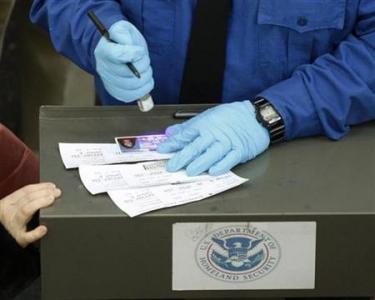
As a world traveler she observed that personal items are routinely handled by numerous individuals on a daily basis. Government, airports, hospitals, restaurants, retail stores, and security jobs can handle and be exposed to hundreds of cards per day… through her work in healthcare, and consumable products she understood there could be a solution and set about to solve this problem.


Interesting FAQs:


  • Identity badges worn by hospital, government and other professions may be contaminated with pathogenic bacteria, which could be transmitted to patients, co-workers.
  • bacteria, fungi, virus or other microbes can live on the surface of an ID or credit cardfor up to 6 hours after contact
  • plastic cards can carry germs, and without precautions, you can become a host for flu and other bugs
  • some of the hardiest germs can successfully reproduce on plastic surfaces for weeks
  • employees are reluctant to clean or disinfect plastic identification cards for fear the cleaner or disinfectant will damage the card
See the following articles: 

 
Design by Free WordPress Themes | Bloggerized by Lasantha - Premium Blogger Themes | Best CD Rates