Showing posts with label credit cards. Show all posts

Monday, March 30, 2020

Disinfecting your bank card once a week, an expert reveals

Expert reveals you should be disinfecting your bank card once a week because it could be contaminated from previous users all touching the same reader amid coronavirus outbreak
Keeping your card clean - is in your hands

A Physician has revealed how debit and credit cards can carry microbes from those who have used the same card reader before you, including bacteria such as salmonella and E.Coli.

Former orthopaedic surgeon Dr Chike Emeagi, Medical Director of Hampstead Aesthetics Clinic and Dr Chike Clinics, told FEMAIL that while the risk is low, it is still possible for corona virus particles to survive long enough on the flat surface of a card reader to be transferred to your card. 
He explained that germs can hide in the nooks and crannies of watches, rings, credit cards and bank notes, and recommends disinfecting your cards and jewelry once a week.
Comparing credit cards to touching door knobs and handles, he suggested using disinfectant wipes to clean cards, and warm water and soap for jewelry. 
Dr Chike said: 'I can certainly envisage a scenario where your card could be contaminated with microbes from those whom have used the exact same card reader previously. 

'Germs can hide in nooks and crannies in objects including watches, rings, credit cards, coins and bank notes - things we ordinarily would not worry about.

'Because of limited knowledge of this virus and how it came about extreme vigilance to hygiene is paramount.  
'The issue is that from an infection point of view, handling a credit card is similar to touching any other surface - doorknobs, stair-rails etc.
'Any surface has potential to harbor germs-bacteria and viruses.' 
The World Health organisation recently released a statement describing the risk as 'low', adding: 'With proper hand cleaning, the risk of being infected with the new corona virus by touching objects, including coins, banknotes or indeed credit cards, is very low,' World Health organisation-WHO. 
Various studies have confirmed that the virus can remain viable in the air for up to three hours, on copper for up to four hours, on cardboard up to 24 hours and on plastic and stainless steel up to 72 hours.
Dr Chike concluded: 'This suggests the virus could live on credit cards anything from hours to days.   
'The bacterial bugs commonly found on cards include  staphylococcus aureus, the cause of staph (skin) infections, salmonella enterica and E.Coli, a common cause of food poisoning.
'It important to note that the possibility of catching corona virus through your card is low but theoretical. 
'I would recommend using soap and water or just hot water for jewelry and disinfectant wipe for credit cards - especially the cards you use regularly. 
'The frictional force of wiping is said to be sufficient to wipe away any virus, especially with soap or chloride -based cleaners.
'You could also wear gloves when holding your card.
'But the main consideration is to use caution. wash your hands after handling anything that you think could be contaminated'.
https://www.dailymail.co.uk/femail/article-8160675/Expert-reveals-disinfecting-bank-card.html?offset=173&max=100&jumpTo=comment-528401155&reply=528401155&ito=rcreplyemail#comment-528401155

Friday, August 9, 2019

Antimicrobial Badge Holders - Coming Soon to the USA

Antimicrobial Badge Holder - Made in the USA!

First Antimicrobial Badge Holder was produced today in North Carolina 


Antimicrobial Badge Holder

Mr. Donald Black, President of New Generation Product (NGP) was on hand in North Carolina to witness the first Antimicrobial Badge Holder manufactured in the USA.  The inventor, Lisa Holmes was thrilled to hear the news, having invented the product in 2010.  Lisa said, "I am relieved and elated there was a finally a solution coming to the market that will control the transmission of germs and pathogens on employee or school ID Badges and cards.”


A simple solution to controlling bacteria on your ID badges! 

ANTIMICROBIAL BADGE HOLDERS IN THE USA


The badge holder patent is pioneering the emerging field of Antimicrobial Identification and Cash Substitution Instruments. Offering a simple solution for inhibiting the growth and transmission of germs, viruses and dangerous pathogens that thrive on the surfaces of intensely circulated products.

(Left) Don Black holds the first Antimicrobial Badge Holder ever made in the United States

Monday, June 10, 2013

Quarter of people have fecal bacteria on hands, says study


A quarter of people have fecal bacteria on their hands and 11% of hands carry more germs than a dirty toilet, a new survey has shown.

Don't forget to wash your hands!

Fecal bacteria on 26% of hands
Such a high percentage is a particular problem in the food sector, where hygiene and biosecurity are vital to businesses.

The research was carried out by experts at Queen Mary University of London and the London School of Hygiene & Tropical Medicine. It was discovered that 26% of hands, 14% of bills and 10% of credit cards in the tested positive for fecal bacteria.

Too few people are washing their hands properly, marketing director Lee Wright of the hand sanitizing company Slingsby said. “According to the UN hand washing could save a million lives a year globally and is the most cost-effective intervention to prevent the spread of disease.”

He added that by implementing adequate hand washing facilities, examples can be set. “Signs in bathrooms reminding people about the importance of washing their hands are also proven to improve hygiene.”

Source:
07 June, 2013

Saturday, September 8, 2012

Five common objects dirtier than a toilet seat


The household toilet seat may be widely considered a bacterial breeding ground but there are many other seemingly benign everyday objects that are far dirtier and pose a greater health risk.
Last week scientists at the University of Arizona found that mobile phones had more germs on them than toilet seats, because phones regularly come into close contact with users' hands and mouths and are rarely cleaned. But that’s not the only filthy thing you might have your hands on right now — here are a few more reasons to avoid touching anything.
Cash and credit cards
Obvious one here — the wads of cash in your wallet carry more germs than the average toilet seat, with some harboring E coli.
Dr Ron Cutler, senior lecturer at the School of Biological and Chemical Sciences at Queen Mary University of London, analysed 200 bank notes and 45 credit cards and discovered that 26 percent of the notes and 47 percent of the cards had high levels of bacteria. "We all handle money and credit cards on a daily basis but it is unlikely that we wash our hands directly afterwards. Good hand hygiene at all times can help prevent the spread of infection," Dr Cutler said.
Cutting boards

A dirty chopping board. (Getty)
A number of bacteria hotspots are found in kitchens or anywhere that food is prepared, according to Associate Professor David Gordon of the Australian National University's Research School of Biology.
"Plastic cutting boards are another common breeding ground for bacteria," he told ninemsn.
Assoc Professor Gordon said wood cutting boards were perceived to be better than plastic because they are made from a natural product but both were usually rife with germs.
"They are hard to clean because they tend to be scoured by knife cuts and they make good places for bacteria to be lodged," he said.
Sponges

A filthy sponge in action. (Getty)
Sponges are an ideal breeding ground for bacteria as they offer the perfect conditions for germs to multiply.
"A lot of things that live in a gut or host need a moist environment to survive. Dry things are low risk," Assoc. Professor Gordon said.
"Things like sponges, in terms of levels of contamination, are likely to have bacteria that potentially could cause disease in people.
"You get things like E coli and salmonella in them."
He said tea towels pose a similar risk but sponges were a greater threat because they were usually moist.
Keyboards and steering wheels

A heavily thrashed keyboard and mouse. (Getty)
Car steering wheels and computer keyboards are objects that are handled a number of times a day, possibly by more than one person and are rarely cleaned.
Sometimes the dirt that builds up on them can be visible but before it gets to that stage there is already a hive of microbial activity unfolding.
A study undertaken by Queen Mary University found 700 harmful bacteria per square inch on the average steering wheel, compare to 80 found on the average toilet.
"They contain bacteria but whether you can get something from them that poses a health risk is unlikely," Assoc. Professor Gordon said.
"They are usually a fairly non porous surface that dries out and the bacteria that live there may be things we have on our skin naturally anyway.
Bathroom mats 
A bacterial breeding ground. (Getty)
Lisa from The Simpsons once said that her mother's heart "won't just wipe clean like this bathroom countertop: it absorbs everything that touches it, like this bathroom rug."
Bathroom mats are a common bacterial breeding ground absorbing a number of harmful germs including fecal matter.
Fortunately most people, except perhaps small children, are unlikely to come into dangerous contact with them.
"There may be bacteria living there but they probably don’t come into contact with anybody," Assoc. Professor Gordon said.
Source: Associate Professor David Gordon, Queen Mary University, University of ArizonaAuthor: Martin Zavan. Approving editor: Henri Paget. |  13:00 AEST Wed Sep 5 2012Web: http://news.ninemsn.com.au/health/8527863/common-objects-dirtier-than-a-toilet-seat

Tuesday, April 10, 2012

Germs in your wallet can make you sick - tests prove it


Bio-Clean director Peter Guerin, conducted tests that show just how dirty money can be.
Peter GuerinGerms on money may be making unwary people sick - some notes are more than six times filthier than a public lavatory.


But don't think swapping it for plastic will magically make the germs disappear.
A Public Defender investigation of 10 Melbourne Australia shoppers' wallets found cash and credit cards could be potential hotbeds for bacteria.
In the worst example, a $10 note recorded a contamination count of 63,556 - that's 6.4 times higher than the average count from similar tests on public lavatory seats throughout the city.
A reading below 500 is considered acceptable.
Credit and debit cards were generally cleaner, but one recorded a count almost double a toilet. Mobile phones swabbed also returned worrying results.
Bio-Clean director Peter Guerin, who conducted the tests, said bacteria such as staphylococcus and E.coli, which can cause severe diarrhea, were likely dangers. "You've got a lot of live cells sitting on an inanimate surface," Mr Guerin said.
Werribee's Sharon Rowling, one of the shoppers to have her items tested, said the results were a shock. "That is where we get all these bugs," she said.
Public Defender gauged the number of living organisms on each surface using a lumitester, a quick way to check general cleanliness.
RMIT food science senior lecturer Dr. Bee May said food and money should never be double-handled, a mistake hospitality staff often made. Ideally a separate staff member should handle cash, she said.
"They have to treat money as a raw food, basically, and ensure there is no cross-contamination." Regular hand washing is the simplest way to avoid germs.
Germs in your wallet can make you sick - tests prove it 

By Wes Hosking Herald Sun March 26, 2012


Sunday, October 30, 2011

9 Money Habits That Can Literally Make You Sick

Click here for our new sales flyer: Antimicrobial Cards Flyer

9 Money Habits That Can Literally Make You Sick 
bJodi Helmer CBS Moneywatch | Apr 21, 2011
You already know that dropping a few dollars at the fast-food drive-through every day will take its toll on your health — but you might be surprised to learn about other spending habits that could be harming your health and well-being. Before you whip out your credit card to pay for groceries one more time, read the following danger signs.

Tuesday, October 11, 2011

"Contagion" | a lethal virus transmitted by a traveler's credit card, poker chips?

An international traveler reaches into the snack bowl at an airport bar before passing her credit card to a waiter...One contact. One instant. And a lethal virus is transmitted. In the film the virus was transmitted from a contaminated pig, to the cook, the cook shook hands with the traveler.  She was at a casino in China.  The traveler then used her debit card to get money from an ATM, played with poker chips, used her credit card at the airport. People don't take time to clean everything they touch while in public, or traveling. This movie is a fantastic infomercial for why we need manufactures to manufacture antimicrobial credit / debit cards, poker chips.


Friday, August 5, 2011

Why Antimicrobial Cards? Once circulated in the public, plastic cards are apt to harbor germs

Why Antimicrobial Cards?  Once circulated in the public, plastic cards are apt to harbor germs.  You cannot always control who has handles your cards.  Since you cannot control behaviors, you have to control the surface that the germ lands on, the contaminator that you may come in contact  with.  Why not make the plastic PVC card out of antimicrobial plastic? 


An analysis of workers at Monash Medical Centre showed that badges carried pathogenic bacteria, according to research published in the Medical Journal of Australia. The Researchers collected samples from the surface, edge and connections of badges worn by 53 nurses and 18 doctors. They isolated 18 pathogens from badges.  Of the microbes isolated overall, seven were the 'superbug' methicillin resistant Staphylococcus aureus (MRSA); 29 were methicillin sensitive S. aureus (MSSA); four were enterococci and five were aerobic gram-negative bacilli.


In the case of credit cards, hotel keys, or membership rewards cards, plastic can accumulate germs just as fast as cash. According to Llelwyn Grant of the Centers for Disease Control, "Any surface could contribute to the passing of the virus, which typically will live up to six to eight hours after contact has been made."


A simple solution to controlling bacteria on your credit cards and ID badges! Information about how germs and microbes remain on the surface or your cards or employee badges.  My hope is that one day the manufactures of these cards will take action, not just put an overlay on the card, that will rub away, but make the card out of antimicrobial plastic pellets that would be impregnated with the antimicrobial agent, the more you rub it, the antimicrobial agent would come to the surface and help kill dangerous pathogens.  Ask your card provider why they don't request that the cards be made of antimicrobial material.  

Monday, June 27, 2011

How to Clean Your Credit Cards


How to Rid Your Purse of Bacteria & Clean Your Credit Cards


How many of us think about the germs that are in our purses or pocketbooks? Even more so how many of us take the time to clean them? 

A scientist ran some tests on a mother of two, a single woman, and a woman executive's purse. In the mother of two he found bacteria that would be found in bathrooms and toilets. This particular bacteria would cause nausea and vomiting. 

The second, a single woman he found she had cocaine residue on her money and fecal matter on her credit cards. The third was the worst. He found a bacteria that was related to meningitis. With the executive he found that she was constantly interacting with others and she was the most contaminated.

Here are a few tips to cut down on the germs.
Instructions


Things You'll Need


  • Anti Bacterial Wipes
  • alcohol
  • Q-Tips
    • 1

      Empty your purse once a week and wipe the inside of your purse or wallet with an anti-bacterial wipe. You can also use cotton balls and a little alcohol for leather. Do not use the alcohol on colors.
    • 2

      Repeat the process on your wallet or any pouches you might use for coupons or make up. Get rid of any expired Make-up. Do not share your make-up. Dip the tips of your lipsticks in alcohol. Gently take the top layers off any powdered make-up with a q-tip.
    • 3

      Gently wipe down your credit card with a cloth and a little soapy water not to touch the scan on the back of the card. 
      There is not much you can do with the money but you can wipe down your change. It seems extreme but think about all the people that handle the money before you get it. Try and get new bills when possible from the bank.
    • 4
      Last just be conscience of where you place your purse. You should never put it on the floor. Keep some travel size hand sanitizer with you.
How to Rid Your Purse of BacteriaBy drenee eHow.com 

Friday, June 17, 2011

Surprising Places Where Germs Can Live | Check out counter

PIKEVILLE, Ky. - Surprising Places Where Germs Can Live | Check out counter  

While people are often conscientious about picking up germs after taking public transportation or using a computer keyboard, those aren’t the only spots where germs can linger. As it turns out, germs are everywhere. They are even on our bodies when we’re not sick.

“The difference is whether or not those germs will make us ill. And that all depends on the type of germs you are exposed to and your immune system’s ability to fight them off,” explains William Betz D.O., M.B.A., FACOFP, senior associate dean for osteopathic medical education at the Pikeville College School of Osteopathic Medicine.  Betz discusses the surprising places where germs can live and ways you can minimize your chances of becoming ill through contact with germs.


Checkout Counter: At many checkout counters, there is a ledge for shoppers to write out a check and a key pad for people to swipe their debit or credit card and type in their PIN number. These are two areas where shoppers stand— and perhaps cough or sneeze— while waiting to be checked out. 

Betz stresses that the best way you can protect yourself from germs is to avoid sneezing or coughing into your hands. Instead, you should sneeze into your sleeve or another body part that won’t be touching any common area. In addition, you should use your own pen to write checks or sign receipts as a way to minimize your exposure to germs in the checkout line.

William Betz D.O., M.B.A., FACOFP, is the senior associate dean for osteopathic medical education at the Pikeville College School of Osteopathic Medicine.

Wednesday, June 15, 2011

5 reasons credit cards collect germs

Spending is on the rise in the midst of flu season. What you may not realize is these things feed into each other.

The more time spent with others and the more money your hands touch the more likely it is that you're going to get sick. And if you think dirty cash is the only way that money makes you ill, think again. Those credit cards you whip out to pay for new gadgets and dinners with loved ones are also covered in germs.

5 reasons credit cards collect germs
Here are the five biggest reasons credit cards are likely to carry germs:
    Is your credit card making you sick?
  1. Flu germs remain alive on surfaces. That includes the plastic of your credit cards. These germs can live anywhere from a few hours to several months!
  2. Germs thrive in the conditions where you keep your credit cards. Most people store credit cards in wallets, purses and pockets. These are all dark, warm, slightly moist places--great conditions for germs to thrive.
  3. You're too casual about where you place your credit cards. You set credit cards down on counters and stick them into restaurant cardholders. Instead, get in the habit of passing credit cards directly between the person doing the processing, and wipe them clean regularly.
  4. Many people touch your credit cards. Every time you hand your credit card to a cashier, waitress or friend, you're putting it in the hands of someone else who may have the flu. Your exposure soars when you add in the number of people with whom you share credit card/ATM keypads. A Pikeville College Report points up that the same places where you stand to hand over your credit card are places where people commonly sneeze or cough during their own transactions, so don't thinking sliding it across the counter provides any protection.
  5. Your credit cards touch other germ-laden items. The most common example is if you store your credit cards right next to your paper money--a very filthy decision indeed!
5 easy ways to keep your credit card clean
Protect yourself from germs this season with these five easy tricks:
  1. Sanitize your hands immediately. It is worth it to protect yourself by carrying around alcohol-based hand sanitizing wipes. Every time that you pass your credit card to a store clerk or use a keypad to enter in your PIN, you're putting yourself at risk of germs. Simply wiping down your own hands with sanitizer after each transaction will help. You may even want to wipe down credit card keypads before using them to further reduce the likelihood of catching an illness from these credit card devices. Engage in proper hand washing as soon as possible after all transactions. This is one of the most effective ways to eliminate the flu.
  2. Wipe down your credit cards, too. Lightly wiping down credit cards with the same type of sanitizer will further decrease your risk of getting the flu this season.
  3. Avoid the use of communal pens. When asked to sign a receipt, pull out your own pen from a clean pocket or purse rather than using one that a bunch of other people have put their germs on. If using a mechanical signature system, a retracted ballpoint pen works safely on those as well.
  4. Keep your hands away from your face. This is a leading way to keep any germs you've collected throughout the day from getting into your body and making you ill. You may not always remember to clean your credit cards but if you can remember to keep your hands off of your face then you'll still protect yourself from those germs.
  5. Keep each individual credit card in its own plastic case. Don't let credit cards touch each other or any money in your purse or wallet.
By Kathryn Vercillo | Tuesday, April 12th, 2011 | Is your credit card making you sick? | Money Blue Book

Sunday, June 12, 2011

Dr.Oz: bacteria lurks on your credit cards

Dr. Oz's All-Star Advice: bacteria lurks on your credit cards 

Suzanne's Purse: I've got something Suze's really excited about: your credit card. It's been used a lot. She wants to cut it, and I've got a medical reason to. 


Dr. OzIt has something called enterococcus in it. When you have good guy bacteria protecting you, that's fine. But if you've got too much enterococcus, and if it's on your credit card, it gets into the numbers, gets into those digits, and it lives there....that can go to your heart. It can cause infections of some of the major organs in the body.

It's easy to deal with. You just clean it with an alcohol pad. You clean your credit cards off. You don't have to do it every time you go shopping, but once in a while. 


Remember, they're scooping credit cards through those machines. You've got to assume you're touching the hands of hundreds of people when you get your credit card.


From: Episode 1
OWN TV  |  January 03, 2011

Antimicrobial credit card information | Patent holder:Lisa Holmes   

Tuesday, February 8, 2011

What do toilet seats and ATMs have in common?

What do toilet seats and ATMs have in common? | Jeanne Moos (CNN) | January 13, 2011


It's probably not a bad idea to wash your hands after using an ATM. A recent British study found ATM pin pads were as contaminated as public toilets and the type of bacteria found was comparable. 

Bad hygiene leading to dirty fingers contaminating the keypads are likely to blame. Although the bacteria isn't deadly, experts say it can lead to sickness. 


Sunday, February 6, 2011

DOWNLOAD INFORMATION ABOUT ANTIMICROBIAL CREDIT CARD & IDENTIFICATION BADGES

Click here for our new sales flyer: ANTIMICROBIAL-CREDIT-CARDS-IDENTIFICATION-CARDS


United States Patent Office issued patent no. 7,851,517 to Lisa Holmes for all manner of antimicrobial plastic cards and holders.


“I came upon the problem during on a site visit to Hunter Holmes McGuire Veterans Affairs Medical Center in 2005,” said Lisa Holmes. She observed a caregiver bending over a veteran patient. This VA staff member touched the patient with her government ID Badge, who then turned and touched another patient with the same badge.


The patent holder worked on infection control issues as industry rep to the American Society of Healthcare Environmental Services (ASHES). She also worked on issues relating to credentialing for the American Logistics Association. Lastly working in non medical supplies, she was aware of the recent introduction of antimicrobial pens and keyboards.


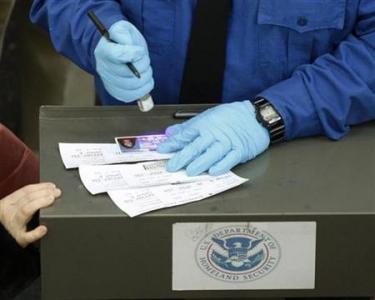
In that moment, Lisa realized that the transfer of microbes, viruses and other sources of contamination via cards or like devices (e.g., credit cards, drivers' licenses, membership cards, hotel room keys, department store cards, employee badges, name badge holders and so forth), may have  been overlooked. Card manufacturing companies have focused on safeguarding the security of the data on the card, but not the card itself. That in fact, cross-contamination could be controlled and limited by using her new invention.


As a world traveler she observed that personal items are routinely handled by numerous individuals on a daily basis. Government, airports, hospitals, restaurants, retail stores, and security jobs can handle and be exposed to hundreds of cards per day… through her work in healthcare, and consumable products she understood there could be a solution and set about to solve this problem.


Interesting FAQs:


  • Identity badges worn by hospital, government and other professions may be contaminated with pathogenic bacteria, which could be transmitted to patients, co-workers.
  • bacteria, fungi, virus or other microbes can live on the surface of an ID or credit cardfor up to 6 hours after contact
  • plastic cards can carry germs, and without precautions, you can become a host for flu and other bugs
  • some of the hardiest germs can successfully reproduce on plastic surfaces for weeks
  • employees are reluctant to clean or disinfect plastic identification cards for fear the cleaner or disinfectant will damage the card
See the following articles: 

 
Design by Free WordPress Themes | Bloggerized by Lasantha - Premium Blogger Themes | Best CD Rates